Most of us are becoming more aware of what we eat and drink. We read food labels, think about the water we drink, and try to make better choices for our homes and families.
But have you ever stopped to think about how many different products you use every single day?
Before you even leave the house, you may have already used shampoo, conditioner, body wash, face wash, deodorant, lotion, makeup, hair products, and toothpaste.
Then there are the products we use around the house: dish soap, dishwasher detergent, laundry products, hand soap, countertop cleaners, bathroom cleaners, and more.
That's a lot of products becoming part of our everyday environment.
Your Water Matters—But It's Not the Only Thing That Matters
At Atlas Aqua Filtration, we spend a lot of time talking about water: what's in it, where it comes from, and what happens before it reaches your faucet.
But think about all the products we use with that water.
We shower with water, then add shampoo, conditioner, and body wash.
We wash our clothes with water, then add laundry products.
We wash our dishes with water, then add dish soap or dishwasher detergent.
We clean our homes with products used on countertops, floors, and other surfaces our families touch every day.
So while the quality of your water matters, it's only part of the picture.
What We Put on Our Skin Matters
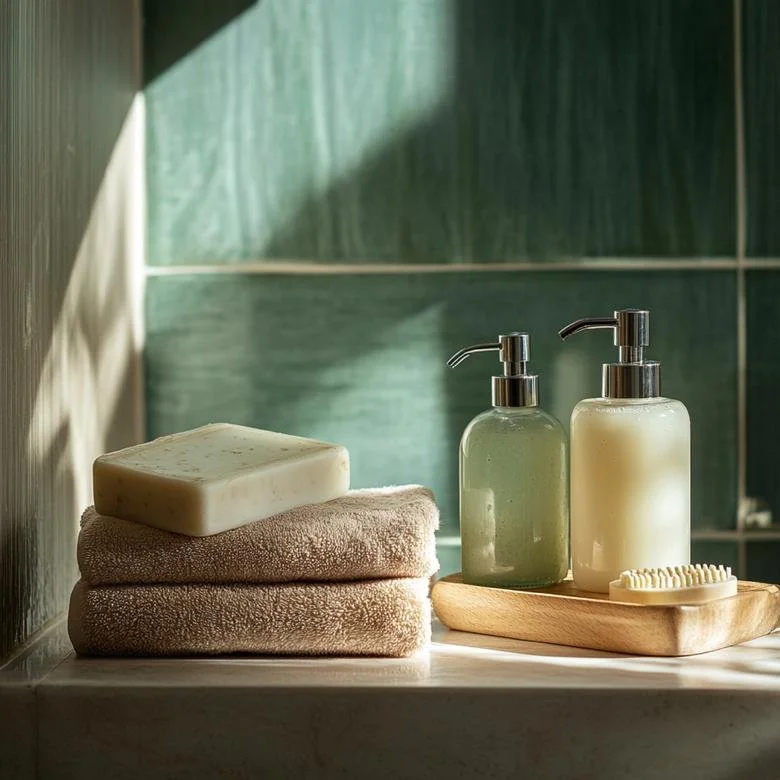
Think about how many products touch your skin every day: shampoo, conditioner, body wash, lotion, makeup, deodorant, and more.
Our skin helps protect us, but it can also come into contact with and absorb certain ingredients from the products we use.
Different ingredients can interact with or pass through the skin differently depending on the ingredient, the product's formulation, how much is used, and how often we use it.
Scientists sometimes call contact with substances through the skin dermal exposure. That's really just a technical way of describing something simple: what we put on our skin matters.
That's one reason researchers continue to study ingredients found in personal-care products, cosmetics, and other products we use regularly.
This isn't about being afraid of everything in your bathroom. It's about paying attention to what you use over and over again.
What Are Endocrine Disruptors?
You may have heard the term endocrine disruptors. It sounds complicated, but the basic idea isn't.
Your endocrine system helps regulate hormones, which play important roles in growth, metabolism, reproduction, and many other functions throughout your body.
Researchers are studying certain substances because they can interfere with the way hormones normally work.
Some of these substances have been found in certain personal-care products, cosmetics, and household products.
That does not mean every personal-care or cleaning product contains these substances, and it does not mean using one particular product will cause a health problem.
It means researchers are asking important questions about the different exposures we encounter in everyday life.
Understanding what's in the products we use is one way to make more informed decisions for ourselves and our families.
Cleaning Products Are Part of the Conversation, Too
And it's not just what we put on our skin.
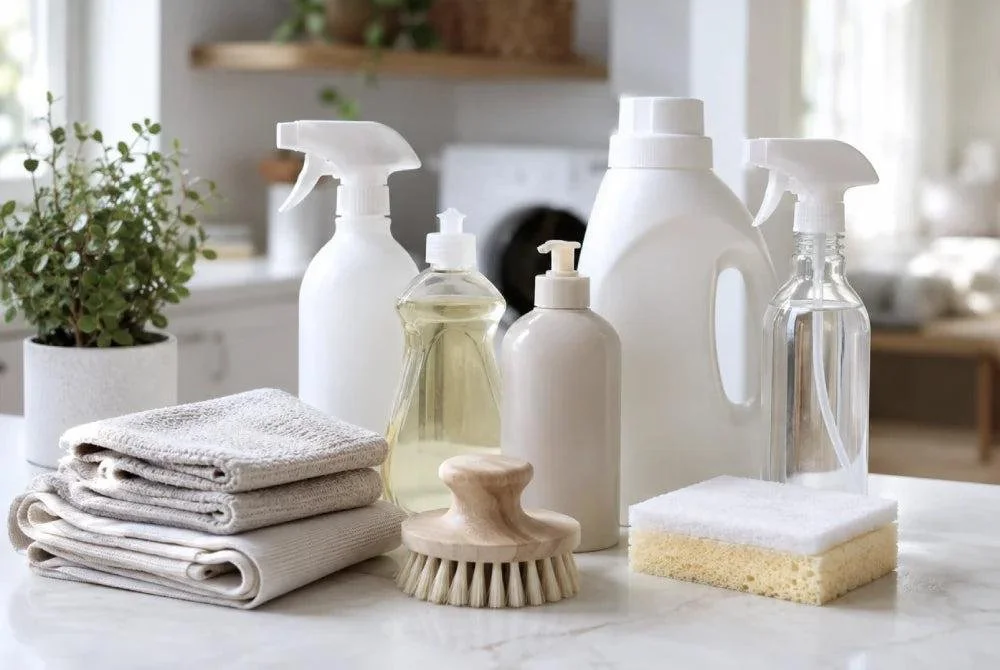
Think about what we use to wash our clothes, clean our dishes, wipe down our counters, clean our bathrooms, and freshen our homes.
Some household products can release substances into the air while we use them, which is one reason product labels sometimes recommend good ventilation.
The U.S. Environmental Protection Agency (EPA) encourages proper ventilation when using products that may affect indoor air quality.
Again, this isn't about saying every conventional cleaning product is dangerous.
It's about asking a simple question: If we use these products all the time, shouldn't we know a little more about what's in them?
What About All Those "Chemicals"?
The word chemical can sound scary, but not all chemicals are bad.
Water is made of chemicals. Plants contain chemicals. Our bodies contain chemicals.
So we aren't interested in telling people to live a "chemical-free" life. That isn't realistic.
We're interested in making more thoughtful choices about the products we use regularly.
Read labels. Ask questions. Learn what you can. Then choose what makes sense for your family.
Plant-Based Doesn't Automatically Mean Perfect
We also want to be transparent.
Just because something says "plant-based" or "natural" doesn't automatically mean it is right for every person or every situation.
People can have sensitivities or allergies to natural ingredients, too. A product's safety depends on its ingredients, formulation, and intended use, not simply whether it comes from plants.
That's why it's important to look beyond marketing terms and learn more about the products you're bringing into your home.
This isn't about promises. It's about having more choices.
Better Choices Can Happen One Product at a Time
You don't have to change everything in your home overnight.
Maybe you start with your shampoo.
Next time, it's your dish soap.
Then your laundry products or household cleaners.
Small changes can be easier to manage than replacing everything at once.
As you run out of products you already use, consider taking a few minutes to read the labels, compare ingredients, and explore alternatives.
Over time, those choices can change the kinds of products you use throughout your home.
The goal isn't perfection. It's simply being more informed about what you're using every day.
Why Atlas Is Expanding the Conversation
At Atlas Aqua Filtration, our focus started with water.
We help homeowners and businesses throughout Greater Houston and surrounding Southeast Texas communities with whole-home water filtration, reverse osmosis systems, and water testing.
We believe understanding your water is an important part of making informed choices for your home.
But water is only one part of your everyday environment.
When you think about how often you shower, wash your clothes, clean your dishes, or wipe down your countertops, it makes sense to consider the products you're using alongside that water.
That's why we're expanding the conversation.
Atlas Aqua Filtration will soon offer a collection of plant-based home and personal-care products directly through our website, including:
Shampoo and conditioner
Body wash and bar soap
Dish care products
Laundry products
Household cleaning products
Additional everyday home and personal-care essentials
We're also exploring biodegradable product options, with environmental claims evaluated according to the specific products and their supporting information.
Our goal is to give customers more choices when it comes to the products they use throughout their homes.
Something New Is Coming to Atlas
We're excited to expand beyond water filtration and bring you more options for the products you use every day.
Our new Clean & Natural Home + Personal Care collection is coming soon!
Better water. Thoughtful products. More choices for your home.
Stay tuned for what's coming to Atlas Aqua Filtration.
Website: AtlasAquaFiltration.com
Phone: 832-856-5429
Atlas Aqua Filtration — Changing Your World, One Drop at a Time.
Frequently Asked Questions
Does what I put on my skin matter?
Yes. Our skin is a protective barrier, but it is also one way we come into contact with ingredients in personal-care products. Different substances interact with and pass through the skin differently, which is one reason it makes sense to pay attention to products we use regularly.
What is dermal exposure?
Dermal exposure means a substance comes into contact with the skin. Some substances can also be absorbed through the skin, depending on their properties and how they are used.
What are endocrine disruptors?
Endocrine disruptors are substances that can interfere with the body's normal hormone system. Researchers study how these substances may affect health and how people may encounter them through everyday products and their environments. Not every personal-care or household product contains them.
Are conventional household cleaning products unsafe?
Not necessarily. Different cleaning products contain different ingredients and have different intended uses. Following product directions, using appropriate ventilation, and storing products safely are practical ways to use household cleaners responsibly.
Does plant-based mean chemical-free?
No. Everything, including plants and water, is made of chemicals. "Plant-based" describes where ingredients come from; it does not mean a product is automatically risk-free or suitable for everyone.
Do I need to replace all my personal-care and cleaning products?
No. You can make changes gradually as products run out. Reading labels, learning about ingredients, and comparing options can help you decide what makes sense for your household.
Where can I find plant-based home and personal-care products from Atlas?
A new Clean & Natural Home + Personal Care section is coming soon to AtlasAquaFiltration.com. Stay tuned for updates as we introduce our new collection.
Disclaimer
This article is for general educational purposes and is not medical advice. The presence of an ingredient in a product does not by itself mean the product is harmful. Potential effects depend on the substance, amount, route and duration of exposure, and other factors. "Plant-based" or "natural" does not automatically mean risk-free or appropriate for everyone.