

Water is something we use every day, often without giving much thought to where it comes from. Whether you're filling a glass, washing vegetables, taking a shower, or running the dishwasher, you rely on water throughout your home.
But not all household water comes from the same source.
Some homes receive water from a municipal or public water system, while others depend on a private well. Both can provide safe, reliable drinking water, but there are important differences in how that water is sourced, monitored, maintained, and treated.
Understanding those differences is a good first step toward making informed decisions about your home's water quality.
What Is the Difference Between City Water and Well Water?
The biggest difference between city water and well water comes down to who manages the water supply and who is responsible for monitoring its quality.
City water is supplied by a public water utility that treats and monitors water according to applicable drinking water regulations. Private well water comes from groundwater accessed through a well, and the property owner is generally responsible for testing and maintaining the system.
| Feature | City Water | Private Well Water |
|---|---|---|
| Water Source | Rivers, lakes, reservoirs, or groundwater | Underground aquifers |
| Treatment | Managed by the water utility | Varies by property |
| Monitoring | Required under public water regulations | Generally the owner's responsibility |
| Water Quality Reports | Annual reports for community water systems | No federal annual report requirement |
| Potential Concerns | Disinfection byproducts, pipe corrosion, minerals | Bacteria, nitrates, minerals, naturally occurring chemicals |
| Maintenance | Utility manages the public system; homeowner maintains private plumbing | Homeowner manages well equipment, testing, and plumbing |
Neither water source is automatically better or worse. Water quality depends on several factors, including the source, local environmental conditions, treatment methods, and the plumbing that delivers water to your faucet.
How Is City Water Treated and Monitored?
Municipal water systems serve homes and businesses through a network of treatment facilities, storage equipment, and distribution pipes.
Depending on the utility's water source and treatment process, water may undergo filtration, disinfection, and other treatment steps before being distributed to customers.
Public drinking water systems are subject to standards established under the federal Safe Drinking Water Act, along with applicable state regulations.
These requirements help protect public health through monitoring, treatment, and reporting.
What Is an Annual Water Quality Report?
If your home receives water from a community public water system, your provider is required to make an annual drinking water quality report available.
This report is called a Consumer Confidence Report (CCR).
It typically includes:
Where your drinking water comes from
Which regulated contaminants were detected
Reported levels of those contaminants
How results compare with applicable drinking water standards
Any reported violations and related information
These reports are a valuable starting point for understanding your local water supply. Community water utilities generally provide them by July 1 each year.
You can look up your local report through the EPA's Consumer Confidence Report resources.
Does Meeting Water Quality Standards Mean Every Home Has Identical Water?
Not necessarily.
Public water treatment and monitoring provide important safeguards, but the water delivered through a public system can interact with individual service lines, plumbing materials, and fixtures before reaching your glass.
For example, lead may enter drinking water through corrosion of certain plumbing materials, including older service lines, faucets, or fittings.
This doesn't mean that municipal water is inherently unsafe. It means that understanding your home's specific plumbing and water conditions can be useful, even when your utility meets drinking water requirements.
What Should You Know About Private Well Water?
Private wells draw water from underground sources, usually aquifers that collect and store groundwater.
Unlike municipal water, private well water typically does not pass through a public treatment facility before entering the home.
Some properties have existing treatment equipment, while others use their well water without additional treatment.
One of the most important differences is that private wells are not regulated under the federal Safe Drinking Water Act in the same way public water systems are.
Instead, well owners are generally responsible for arranging appropriate testing, checking equipment, and responding to water-quality concerns. State or local requirements may also apply.
What Can Affect Well Water Quality?
Well water quality can vary depending on local geology, surrounding land use, well construction, and environmental conditions.
Potential influences include naturally occurring minerals, agricultural runoff, nearby septic systems, flooding, and changes in groundwater conditions.
Some substances may affect the appearance, smell, or taste of water. Others may be present without noticeable changes.
That's why clear-looking water isn't necessarily proof that it meets all drinking water guidelines.
How Often Should You Test Well Water?
The Centers for Disease Control and Prevention recommends testing private well water at least once a year for:
Total coliform bacteria
Nitrates
Total dissolved solids (TDS)
pH
Additional testing may be appropriate depending on your location and surrounding conditions.
The CDC also recommends considering testing after flooding, well repairs, noticeable changes in water quality, or other events that could affect the water supply.
For reliable results, homeowners should use a state-certified drinking water laboratory and ask their local health department which additional tests may be recommended.
Why Your Home's Plumbing Matters
It's easy to focus entirely on where water comes from. But what happens after it reaches your property can matter, too.
Your home's pipes, fixtures, and water treatment equipment are part of the overall water system.
Several property-specific factors can influence the quality or characteristics of your tap water:
Plumbing materials: Certain older materials may contribute metals to water, particularly when corrosion occurs.
Mineral content: Calcium and magnesium can contribute to water hardness, which may lead to mineral buildup on faucets, showerheads, and appliances.
Water stagnation: Water that sits in plumbing for extended periods can interact with pipes and fixtures.
Existing treatment equipment: Filters, softeners, and other treatment systems require proper maintenance to continue performing as intended.
Water pressure and system condition: Leaks, damaged components, and other plumbing problems can warrant additional inspection.
Your neighbor's water experience may not be exactly the same as yours, even if both homes receive water from the same provider.
This is one reason property-specific information can be helpful when evaluating water treatment options.
Why Testing Matters Before Choosing Water Filtration
When homeowners begin researching water filtration, they sometimes start by comparing equipment.
But a better first step is understanding the water itself.
Different water treatment technologies are designed to address different substances and conditions. No single treatment method is appropriate for every possible water-quality concern.
For example, a homeowner dealing with hard water may need a different solution than someone seeking to reduce a specific drinking water contaminant.
An appropriate water assessment may include reviewing a municipal water-quality report, inspecting existing equipment, and selecting laboratory testing based on the property's water source and concerns.
It's also important to understand that basic measurements, such as total dissolved solids, cannot identify every contaminant or establish that water is safe to drink.
The CDC recommends selecting a water filter based on the specific chemicals or microorganisms that need to be reduced, rather than assuming every filter performs the same function.
The goal isn't simply to add filtration. It's to identify whether treatment is needed and choose equipment suited to the actual water conditions.
Whole-Home Filtration vs. Reverse Osmosis: What's the Difference?
Two options homeowners frequently encounter are whole-home water filtration and reverse osmosis.
Although both are forms of water treatment, they generally serve different purposes.
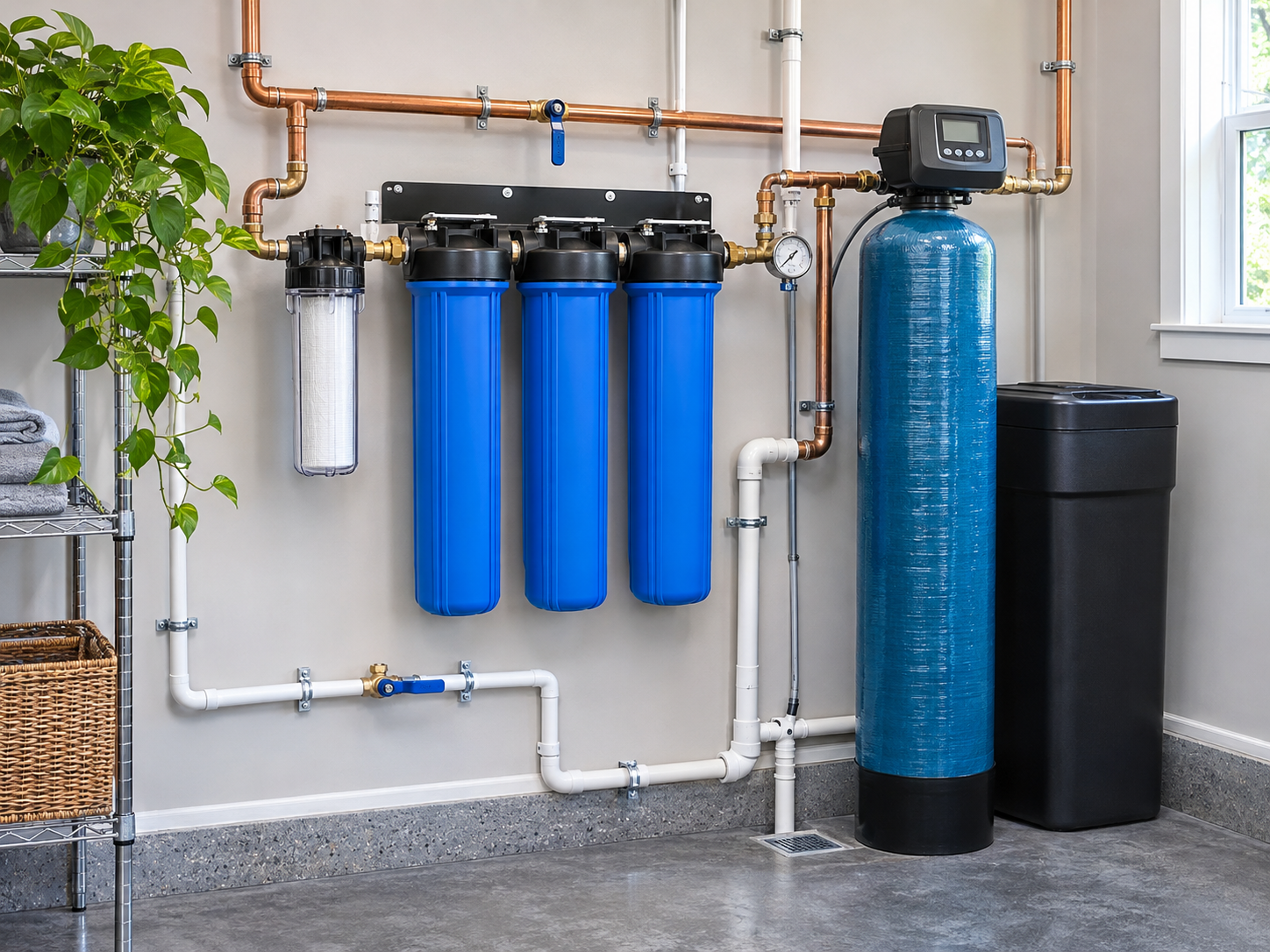
Whole-home water filtration
A whole-home system, also called a point-of-entry system, treats water as it enters the house.
Depending on its design, it may reduce sediment, chlorine, certain odors, or specific contaminants throughout the home's water supply.
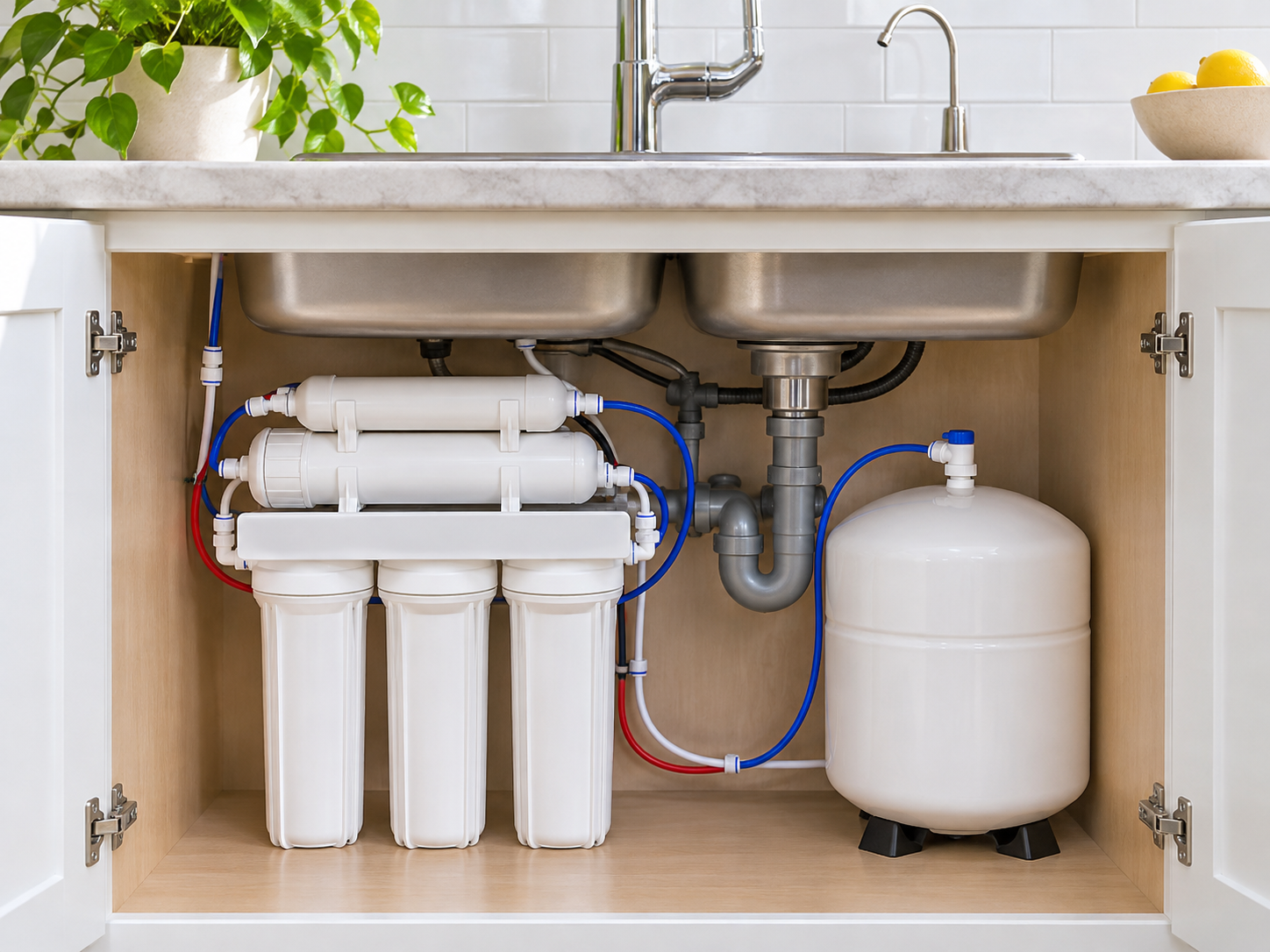
Reverse osmosis (RO)
Reverse osmosis uses a specialized membrane to separate many dissolved substances from water.
Residential RO systems are commonly installed near the kitchen sink to treat drinking and cooking water at a specific point of use.
Which Type of Filtration Is Right for Your Home?
That depends on what you're trying to accomplish.
Whole-home filtration may be appropriate when water characteristics affect multiple areas of the home.
Reverse osmosis may be useful when the priority is reducing particular dissolved substances in drinking water.
In some homes, a combination of treatment technologies may make sense. In others, a targeted system or no additional treatment may be appropriate.
It's important to remember that not all whole-home filters remove the same contaminants, and not every reverse osmosis system has identical performance. Look for independent certification covering the specific contaminants you want reduced.
NSF/ANSI Standard 58 applies to reverse osmosis systems, while other standards address different filtration capabilities.
All treatment systems also require appropriate maintenance. Certain whole-home systems that remove disinfectant residuals may allow additional microbial growth in household plumbing if not properly managed. RO systems also produce a reject-water stream, so water efficiency is worth comparing when selecting equipment.
How to Learn More About Your Home's Water
Whether you're on city water or a private well, there are practical ways to become more informed about what's coming from your faucets.
Identify your water source. Determine whether your home receives municipal water or uses a private well.
Review available information. Look at your utility's annual Consumer Confidence Report or your well's previous test results.
Consider your property's specific conditions. Think about plumbing age, existing water treatment equipment, and any changes you've noticed in your water.
Choose appropriate testing. Use a qualified laboratory when testing is needed to identify potential contaminants.
Evaluate treatment options based on the results. Choose a system designed and certified to address the substances or conditions that matter for your home.
You don't need to become a water treatment expert to make better-informed decisions. A little information about your water source and property can go a long way.
Understanding Your Water Starts With Knowing Your Source
City water and well water have different advantages, responsibilities, and considerations.
Public water systems operate under established monitoring and reporting requirements, while private well owners take a more direct role in testing and maintenance.
But regardless of the source, water quality can vary by location and property.
Knowing where your water comes from, understanding how it reaches your home, and using appropriate testing when needed can help you decide whether additional treatment is worthwhile.
At Atlas Aqua, we believe homeowners deserve clear information and practical guidance when exploring their water treatment options.
Whether you're considering whole-home filtration, reverse osmosis, or simply want to better understand your water, the best place to begin is with your home's specific needs.
Interested in exploring your home's water treatment options? Contact Atlas Aqua to discuss your water source, concerns, and available filtration solutions.
Frequently Asked Questions
Is well water better than city water?
Neither is automatically better. City water is monitored under public drinking water regulations, while private well water requires individual testing and maintenance. Actual water quality depends on the source, location, plumbing, and other conditions.
Is city water already filtered?
Municipal water is treated according to applicable requirements, and many utilities use filtration as part of the process. The exact treatment methods depend on the utility and water source.
Can well water be safe to drink without a filter?
Yes, some private well water may meet drinking water guidelines without additional treatment. Regular laboratory testing is important because certain contaminants cannot be identified by taste, smell, or appearance alone.
How do I find out what's in my tap water?
For city water, start with your utility's Consumer Confidence Report. For private wells, arrange appropriate laboratory testing. Property-specific testing may also provide useful information about water at an individual faucet.
Do I need both whole-home filtration and reverse osmosis?
Not necessarily. Whole-home systems and reverse osmosis serve different treatment purposes. The right approach depends on your water conditions, the contaminants you want to reduce, and how you use water throughout your home.